
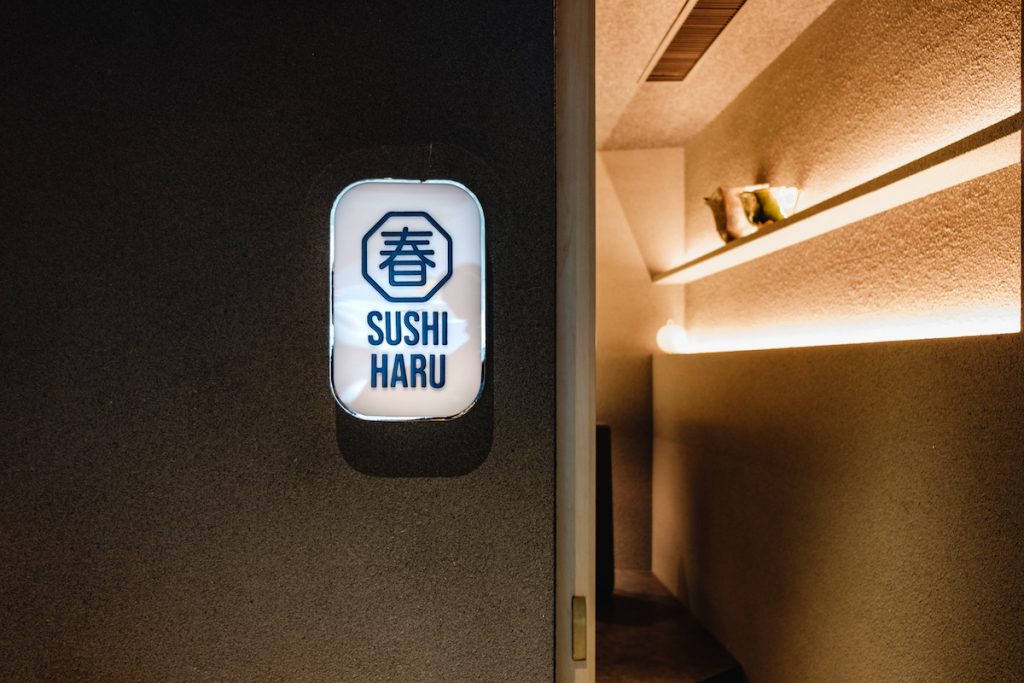
As artisans who love all things from Tokyo, including Edomae sushi, Sushi Haru is the culmination of an almost decade long culinary love affair for our Founders Asim and Chris. There are few dining experiences as revered as the omakase, and with a great respect for the craft and commitment it takes to achieve excellence in this culinary art, we embarked on a journey to build a restaurant that would pay its respects to these deeply rooted institutions.
The truth of omakase lies in the word itself – directly translated, it means “I leave it up to you.”, where the chef determines at the spur of the moment what will appear on the plate, something that is driven not only by the quality and seasonality of ingredients but also on the philosophy of the chef, leading to omakase experiences differing dramatically depending on the cooking style and experience of the chef.
Having worked as a chef in Tokyo for three years, Chris has a deep understanding of the importance in executing sushi at the highest level, he comments “Sushi is the most deceptively simple of foods. There is so much subtlety in the technique, every chef has their different recipe for soy, rice seasoning, their vinegar sourcing, it really is all in the details.”
Now at the helm of the intimate eight seat omakase restaurant tucked away on the mezzanine level of Wyndham tower, Chef Hirokuni Shiga is no stranger to the luxury Japanese dining experience. For Chef Hiro, who grew up in a family of restaurateurs and chefs, it is this constant pursuit of culinary knowledge has defined his career, having spent decades travelling across Japan, Australia, Europe and China, refining his skills in a number of Japanese dining styles, from kaiseki to tempura and even yakitori. But he has always felt the strongest pull towards the intimate, almost primitive experience that the Edomae-style sushi experience embodies. Where between chef and guest, there is nothing other than the quality of ingredients, the preparation and a genuine sense of connectivity.
This deep understanding of the relationships that exist between producer and sushi shokunin, between every ingredient and tool used and ultimately between every guest at the counter, is definitive of the omakase experience and the guiding ethos for Chef Hiro. Returning to the true roots of sushi-eating, one of simple enjoyment and respect for the art, Chef Hiro strives to provide a sense of joy to all guests who join him at the counter. Bringing Sushi Haru far away from the sort of ostentatious, elitist and inaccessible experiences that so many omakase have become, and to establish it as an experience built on trust, respect and craftsmanship. For Chef Hiro, “I don’t want the experience to be unapproachable. In Japan, there are so many hard, long faces behind the counters, a sort of seriousness that can sometimes appear angry. I like to engage more, I want my guest to enjoy their experience and leave filled with that joy, this is what makes true hospitality.”
Connection is essential to his art, he uses only suppliers with whom he has strong and lasting relationships with, the vinegar used, one for white and one for red, a special ratio he holds close to heart. Most importantly, the seafood at Sushi Haru comes from only trusted merchants across Hokkaido, Kyushu and Tokyo. Stepping into the intimate sushi counter is to witness his life’s work on display, a very personal experience, where he works tirelessly to provide a bespoke experience that brings to fruition what was once only a dream: a small sushi counter, built on a deep understanding of the honest connections and relationships between every variable. It is this philosophy that inspires the trust essential to a true omakase experience.
With just eight counter seats in the serene grey space, Sushi Haru serves an omakase menu of the city’s finest Edomae-style sushi. First created in Edo (now Tokyo) the main difference of this kind of sushi is that the fish is marinated rather than served fresh. In earlier times this was out of necessity, chefs needed to use preservatives such as soy sauce, salt and vinegar to prevent the fish from spoiling but found that the natural flavours of the fish could actually be enhanced through this process. Nowadays this is how sushi shokunin display the art and mastery of their craft.
In contrast to the name Haru which means spring in Japanese, the interior provides a dark, moody backdrop that allows the premium ingredients and techniques used to prepare them to shine. Charcoal grey walls and fixtures recede, spotlighting a 250-year-old natural hinoki wood bar that encases the chefs. Hinoki, or Japanese cypress, is a wood revered in Japan and used to construct shrines and other sacred spaces. It is prized for its fragrance, hardness and antibacterial properties and is the centrepiece of many traditional sushi restaurants. Hinoki wood is not sold to just anyone, the use of this traditional material is relationship-based and to receive access, you must be referred by a trusted source. This single piece of wood represented more than half of the total design spend for the restaurant.
Chris comments: “Opening a sushi restaurant is something of a dream come true for me. As a young chef I lived in Tokyo in Tsukiji, I chose that neighbourhood because I wanted to be close to the market and I ate sushi for breakfast every day. I became something of an unofficial tour guide for the hotel I was working at when they had an important guest or celebrity who wanted to see the market. Gérard Depardieu was one of the more memorable guests that I toured Tsukiji with.”
—
Now accepting reservations for lunch and dinner Tuesday through Saturday. Reserve a table here.
Join The Herd for our latest news, weekly perks and exclusives. Sent directly to your inbox.